
Getting energy costs under control – where do a housing company's savings come from?
Energy costs are a significant part of a housing company’s expenses, but finding savings does not always require major investments. The first step is to find out where energy is consumed and whether the building’s systems are working correctly. Regular monitoring, correct settings and planned maintenance help keep costs under control and maintain good living conditions.
Consumption monitoring shows where action pays off
A housing company should regularly monitor its heat energy, property electricity and water consumption and compare them with the corresponding periods of previous years. Property electricity refers to the electricity used by the building’s common areas and equipment.
When comparing heat consumption, it is important to account for the effect of weather conditions. A cold winter increases the need for heating, so annual consumption alone does not tell whether energy use has become more efficient. Weather-adjusted, or normalised, heat consumption helps in the comparison: the energy used to heat the premises is converted to a comparable weather basis.
Alongside consumption, it is worth monitoring costs, since energy prices and the structure of invoicing also affect expenses. If consumption rises without a clear reason, the deviation should be investigated. Collecting readings alone is not enough: observations should lead to maintenance, repairs or checks of settings when necessary.
Consumption monitoring services are available to housing companies. They gather heat, electricity and water consumption data in one place and make comparisons easier. These services can also include automatic alerts about abnormal consumption.
Correct heating and ventilation settings prevent wasted energy
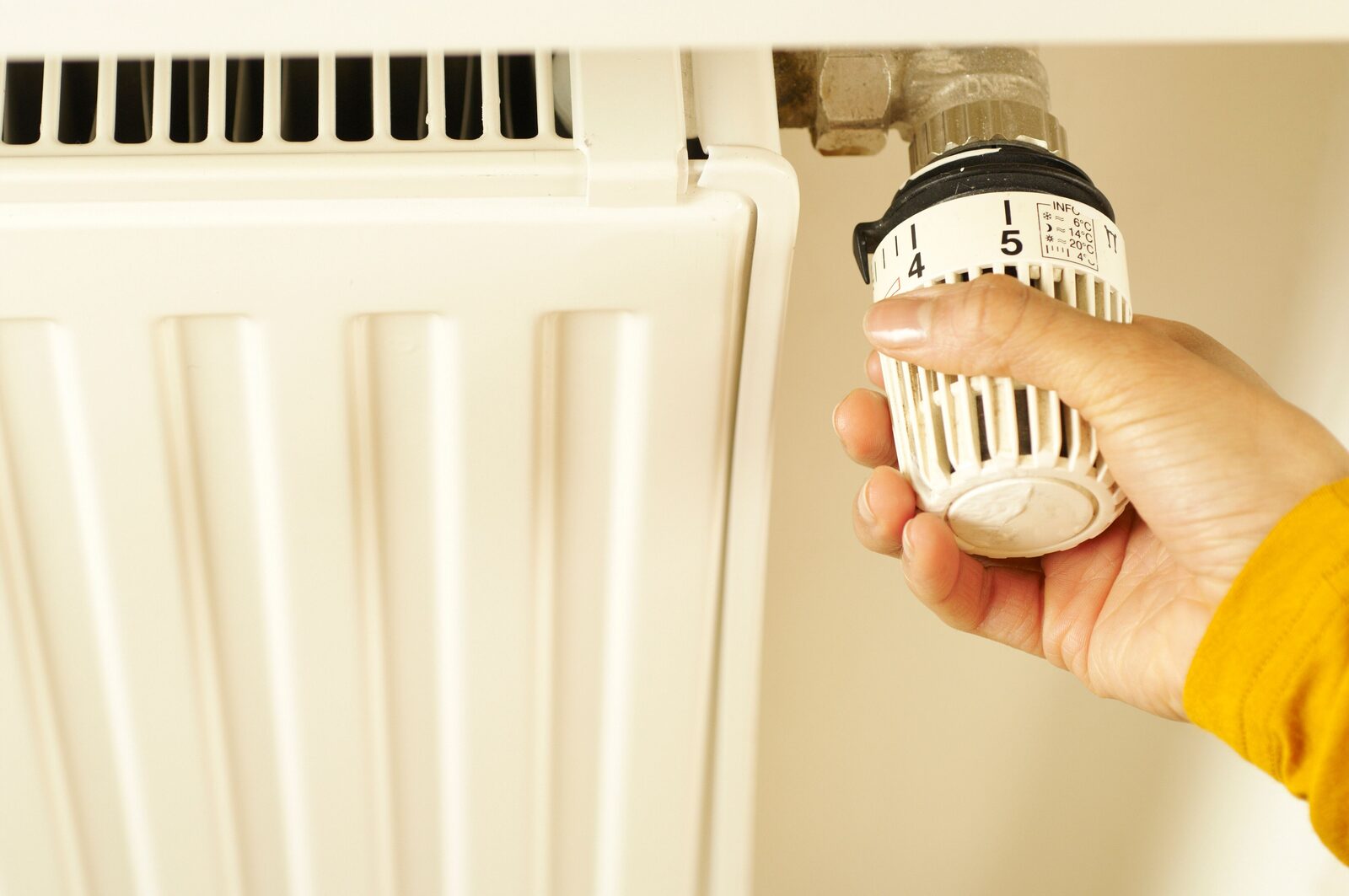
The operation and maintenance of the heating system have a major impact on a housing company’s energy use. Attention should be paid especially to room temperatures, even heat distribution, and the functioning of thermostats and control devices.
If some apartments are constantly too cool and others overheated, the cause should be investigated by measuring room temperatures. The maintenance company can be asked to check the operation of thermostats and other control devices in the apartments. Increasing the heating of the entire building can worsen overheating without solving an individual apartment’s problem. If the problem cannot be resolved with apartment-specific measures, the need for basic adjustment of the heating network should be assessed.
An increase of just one degree in the building’s average room temperature can raise heating energy consumption by about five percent. If the energy used to heat the premises costs, for example, 40,000 euros per year, this means roughly an additional 2,000 euros per year, assuming the energy price stays the same. The actual impact depends on the building and the pricing of heating.
Correct settings, use and maintenance of ventilation also affect energy consumption. The system’s operation should be checked regularly, and at the same time it should be verified that the necessary maintenance has been carried out on time. The filters of ventilation units and supply air valves are replaced according to the manufacturer’s instructions. Valves must not be blocked, and their settings should not be changed without professional guidance. Adequate ventilation is important for indoor air quality and the condition of the building.
Water consumption also affects energy costs
Saving water reduces water and wastewater costs based on consumption. Saving hot water also reduces the energy needed to heat the water.
A sudden increase in water consumption can indicate a leak or a fault in the plumbing. For example, a leaking toilet can increase consumption for a long time before the problem is noticed. Residents should be instructed to report leaking taps and toilets to the maintenance company or the property manager without delay.
Apartment-specific water metering and consumption-based billing encourage water savings. In a 2020 study coordinated by Motiva, water consumption was on average lower in households that paid for water according to metered consumption.
Small measures and future repairs complement each other
Savings can be found, for example, in the lighting of common areas, lighting timers, and the operation of pumps and other equipment. Suitable measures are chosen based on the housing company’s own consumption data and the condition of the building.
Energy efficiency should also be considered when planning future repairs. For example, in connection with a window, facade or ventilation renovation, it can be assessed which energy efficiency improvements are sensible to carry out at the same time. One option worth investigating is heat recovery from exhaust air, in which the heat of the air leaving the building is reused. The suitability of the solution is assessed based on the housing company’s current ventilation and heating systems. After the repairs, correct heating and ventilation settings must also be taken care of.
Before making an investment decision, the estimated savings, service life, and operating and maintenance costs are compared alongside the purchase price. This way the decision is based on the solution’s long-term effects.
The impact of the measures taken is assessed by monitoring consumption and living conditions and by collecting resident feedback.